
Increasing Colorectal Cancer Screening in Rural Communities
There are many things about life in a rural community that attract people: the access to nature, strong sense of community, and slower pace compared to living in a city. Unfortunately, when it comes to colorectal cancer (CRC) risk, living in a rural area can bring challenges. Residents of rural areas often experience higher incidence and mortality rates from CRC. They are also more likely to have risk factors for the disease, and are less likely to be screened for it, resulting in a disproportionate burden of disease.
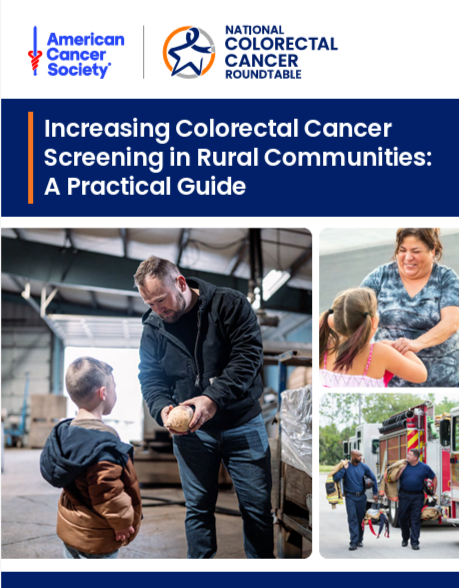
To address this issue, we worked with the American Cancer Society National Colorectal Cancer Roundtable (ACS NCCRT) to develop Increasing Colorectal Cancer Screening in Rural Communities: A Practical Guide. This guidebook aims to increase the capacity of health centers, health systems, and other key partners to understand and act on unique challenges and common barriers to CRC screening faced in rural communities. One of ACS NCCRT’s goals for this project was to create a guidebook that was educational, succinct, easily digestible, and applicable to rural practitioners nationwide.
Ultimately, the content of the guide is based on findings from:
1) a literature review into barriers to CRC screening in rural communities and
2) information collected during interviews with staff from five different organizations serving rural communities
ACS NCCRT’s Rural Communities Advisory Committee identified five organizations, including federally qualified health centers, health systems, and non-profit organizations, that are successfully providing CRC screening to their rural communities using evidence-based or innovative strategies. These organizations were selected based on the diversity of evidence-based strategies used, geographical location, and demographics of communities served. We spoke with nine interviewees across five organizations, who were asked questions about their rural community’s barriers to screening and the details of their efforts, including who was involved in planning and implementing interventions, what barriers their organization faced, and if and how they tailored their interventions to meet the needs of their community. Interviewees were also asked to share any lessons learned, their biggest successes, and what advice they would give to another organization looking to implement similar strategies to increase CRC screening in their own communities.
Learn more about our work.